
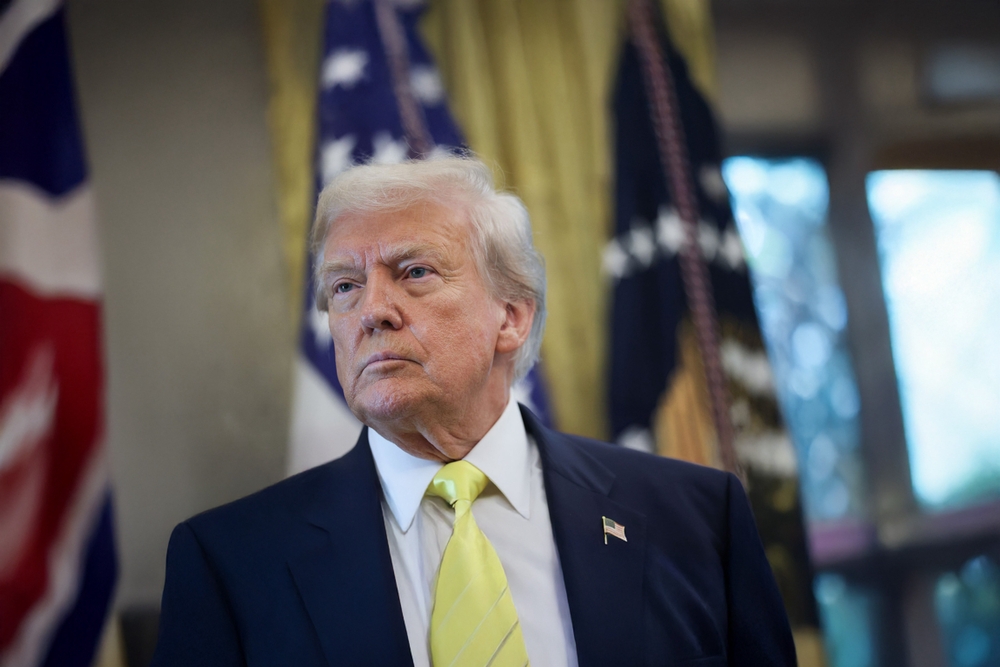
President Donald Trump has signed a proclamation requiring a $100,000 application fee for H-1B visas, representing what experts are calling one of the most dramatic changes to the skilled worker program in decades. The new policy, which took effect immediately on September 21, 2025, also directs the Department of Labor to raise prevailing wage levels to ensure H-1B workers are not hired at below-market rates compared to U.S. workers.
This sweeping overhaul of a visa program long relied upon by U.S. employers affects new H-1B petitions filed for foreign nationals outside the United States. The policy introduces unprecedented cost barriers that business groups and immigration advocates warn could effectively transform the H-1B into a “luxury work permit” accessible only to the wealthiest corporations and most critical workers.
The new fee structure represents a massive increase from current costs, which include approximately $995 in existing fees ($215 for H-1B lottery registration plus $780 for petition filing). It remains unclear whether the $100,000 fee replaces or adds to these existing charges. The administration argues these measures will protect U.S. workers and strengthen wage standards, while critics warn the steep costs could sideline startups and smaller businesses while pushing skilled talent to other countries.
For employers sponsoring just ten H-1B workers annually, the new fee structure could result in $1 million in additional expenses, fundamentally altering the economics of international talent acquisition and potentially impacting America’s position as a global innovation leader.
Specific Impact on Investment Banking Sector
Investment banks face particularly acute challenges from this policy shift due to their strategic reliance on international talent across multiple sophisticated business functions. The financial services industry has become increasingly dependent on global expertise in technology, quantitative modeling, and specialized analytical roles that often require skills not readily available in sufficient quantities domestically. This policy change threatens to disrupt established talent pipelines and force a fundamental reconsideration of how major financial institutions staff their most critical operations.
Verified H-1B Statistics and Investment Banking Impact
Investment Banking Sector H-1B Usage
Based on data from the U.S. Department of Labor’s Labor Condition Applications (LCA) database and U.S. Citizenship and Immigration Services (USCIS) records:
Goldman Sachs: Filed 1,170 labor condition applications (LCAs) in fiscal year 2025 through Q3, with 1,163 approved and 6 denied.¹ The firm filed 304 actual Form I-129 petitions for H-1B visas in fiscal 2025, with 295 approved and 9 denied.²
JPMorgan Chase: Filed 2,859 LCAs in fiscal year 2025 through Q3, with 2,851 approved and 4 denied.³ The bank had 2,440 H-1B approvals in 2025, representing a significant increase from 1,719 approvals in 2024.⁴
Financial Sector Overall: The top 15 US financial firms, including JPMorgan Chase, Goldman Sachs, and Fidelity, collectively submitted nearly 12,000 H-1B visa requests from the fourth quarter of 2023 through the third quarter of 2024, according to USCIS portal data.⁶
Financial Impact Analysis
Based on the most recent filing data:
- JPMorgan Chase: With 2,859 LCAs filed in fiscal 2025 (through Q3), could face approximately $285.9 million in additional annual fees³
- Goldman Sachs: With 304 actual H-1B petitions filed in fiscal 2025, could face approximately $30.4 million in additional annual fees²
- Top 15 financial firms combined: Based on nearly 12,000 visa requests, could collectively face up to $1.2 billion in additional costs annually⁶
The financial impact calculations assume all applications would require the new $100,000 fee. Goldman Sachs’ lower figure reflects actual H-1B petitions filed (304) rather than the higher number of initial Labor Condition Applications (1,170), providing a more conservative estimate of direct costs.
Industry Context
About two-thirds of H-1B visa applications filed by major investment banks are for technology and engineering employees.⁷ This highlights the financial sector’s dependence on international talent for specialized technical roles including quantitative modeling, algorithmic trading, risk management, and financial technology development.
Following the policy announcement, major financial firms have begun advising their H-1B visa holders to remain in the United States. JPMorgan and Goldman Sachs sent internal communications to employees recommending against international travel until further clarity on the new rules.⁸
Impact on Investment Banking Operations
Technology and Quantitative Finance Roles
Investment banks rely heavily on H-1B visa holders for specialized positions that require advanced technical skills. Two-thirds of H-1B applications from major banks are for technology and engineering roles, highlighting the sector’s dependence on international talent for quantitative modeling, algorithmic trading, risk management, and software development.
Competitive Dynamics
The policy creates several challenges for investment banks. While the financial sector represents a relatively small portion of overall H-1B usage at 1.2% of total approvals, the concentration among major firms means the impact will be significant. Financial services firms are among those showing the largest increases in H-1B sponsorship, suggesting growing demand that will now face substantial cost barriers.
Strategic Responses
Investment banks will likely need to:
- Prioritize Critical Roles: Reserve H-1B sponsorship for senior positions and highly specialized roles where the $100,000 investment can be justified
- Explore Alternative Visa Pathways: Increase use of O-1 visas for extraordinary ability workers and accelerate green card sponsorship
- Geographic Considerations: Evaluate offshore operations as alternatives for certain functions
- Technology Adoption: Accelerate automation and AI implementation to reduce dependence on specialized human capital
The policy represents a significant shift that will require investment banks to fundamentally reconsider their talent acquisition strategies while balancing cost pressures with the need to maintain sophisticated capabilities in an increasingly complex global financial environment.
Sources
- H1B Grader. “Goldman Sachs & CO LLC H1B Data – Salaries, Approvals, LCAs.” Accessed September 2025. https://h1bgrader.com/h1b-sponsors/goldman-sachs-and-co-llc-4l0y8lwv2x
- MyVisaJobs. “Goldman, Sachs – Employer Overview, H1B Visas, Green Cards, Salaries, Jobs, Contacts & Reviews.” Accessed September 2025. https://www.myvisajobs.com/employer/goldman-sachs/
- H1B Grader. “Jpmorgan Chase & CO H1B Data – Salaries, Approvals, LCAs.” Accessed September 2025. https://h1bgrader.com/h1b-sponsors/jpmorgan-chase-and-co-5g2r7gdekl
- Newsweek. “These US Companies Are Sponsoring More H-1B Visas Than Before.” September 2025. https://www.newsweek.com/h-1b-visas-immigration-workers-companies-2115698
- Business Standard. “12,000 H-1B visas: JPMorgan, Goldman among top US financial firms filing.” February 2025. https://www.business-standard.com/finance/personal-finance/12-000-h-1b-visas-jpmorgan-goldman-among-top-us-financial-firms-filing-125021401378_1.html
- Foster Global. “Big Banks in U.S. Forced to Reevaluate Hiring Foreign Workers.” February 2018. (Bloomberg analysis) https://www.fosterglobal.com/blog/big-banks-in-u-s-forced-to-reevaluate-hiring-foreign-workers/
- Al Jazeera. “India says Trump’s H1-B visa fee hike could ‘disrupt families’.” September 2025. https://www.aljazeera.com/news/2025/9/20/h-1b-visa-fee-timeline-imposed-by-us-concerning-says-india-trade-body