
The election will not set your bank’s hiring plan. But it could change which groups are busy, which firms are hiring and how hard it is to move. Here is how to read it for your own seat.
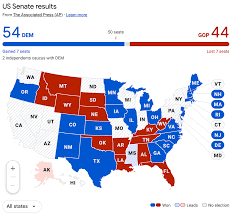
The midterm results landed this week, and Wall Street spent the following days trying to work out what they mean. Democrats will take control of both chambers of Congress in January. Senator Elizabeth Warren is seen as the frontrunner to chair the Senate Banking Committee, and Representative Maxine Waters is the lead contender to chair House Financial Services. TD Cowen put it bluntly: “The run of favorable legislation for the banks has likely come to a close, in our view.” In Texas, voters elected a governor who campaigned on halting new data center projects. And on November 5 the Nasdaq 100 fell 6.4%, partly on fears that the results could slow the AI build-out.
The question we are hearing from bankers is more personal: what does this mean for my group, my firm and my plans to move? Banks do not hire or cut because of an election. They hire because of pipeline. But elections can change pipeline, group by group, and that is what reaches recruiting. This piece walks through where a Democratic Congress could matter for hiring, where it probably will not, and how it looks from your level and your type of firm. It is not a prediction. Policy outcomes are uncertain, and nothing here is a forecast.
What Changes in January, and What Doesn’t
Start with what a new Congress can and cannot do. With a Republican in the White House, sweeping new financial legislation is unlikely to become law. What Democrats gain is the power to hold hearings, open investigations and send letters. TD Cowen said full congressional control likely raises the odds that bank CEOs will be summoned to testify. Tom Perez of Mayer Brown warned firms that “that letter you got six months ago can be next January’s subpoena.”
Meanwhile, the administration is expected to keep governing through the agencies. Edelman’s post-election analysis said it will “lean heavily on agency rulemaking and executive orders,” and warned that “legislative gridlock will not mean policy paralysis or diminished political risk.”
For recruiting, that distinction matters. Regulators, not Congress, approve bank mergers, review antitrust cases and issue visa rules. So the groups most exposed to the midterms are the ones whose clients are likely targets of hearings and investigations, and the ones whose deal flow depends on sentiment and market windows. A useful test for any headline: does it change who can do deals or how fast, what a business line costs, or what clients can build and finance? If not, it probably will not touch your group’s headcount.
Group by Group: Where Hiring Could Feel It
Financial institutions (FIG). Bank M&A has been one of the busiest areas in banking, largely because approvals got faster. Brian Graham of Klaros Group told Banking Dive that the expected wait for a decision is now three to four months, compared with 18 months to two years previously. Bank deal announcements reached 181 in 2025, the highest since 2021, according to S&P Global Market Intelligence. Analysts said banks were likely to act sooner rather than later in case the midterms “send the political pendulum in another direction.” Because regulators run approvals, the election alone does not slow them. But more hearings and scrutiny could make some boards more cautious, and talk of credit-card rate caps, which TD Cowen flagged as a risk both parties broadly support, hangs over consumer finance. For FIG bankers, demand looks steady for now. If you cover regional banks, watch the regulators, not the hearing calendar. If you cover consumer lenders or card issuers, watch the bills.
Healthcare. Healthcare is likely to draw a lot of congressional attention. Edelman said drug makers “should prepare for investigations” into their Most Favored Nation pricing agreements, and named pharmacy benefit managers, hospital pricing and consolidation, and private equity ownership as likely hearing topics. That comes on top of a soft deal market: Levin Associates counted 391 healthcare deals in the third quarter, down 31% from a year earlier, and pointed to state reviews and FTC enforcement weighing on deals. Healthcare bankers are not going to stop being hired. But groups that lean on PE-backed services deals could stay selective, and banks may prize bankers who know how to get a deal through regulatory review.
Technology, data centers and power. This is where politics is moving fastest. In August, Texas Governor Greg Abbott halted the connection of new data centers to the state’s grid and ordered an audit. Governor-elect Gina Hinojosa has vowed to ban data center approvals until the legislature gives Texans a say. Texas accounts for 25% of planned U.S. data center capacity, according to Goldman Sachs, and 76% of voters in a national exit poll opposed a new data center in their community. Edelman also said congressional antitrust committees “could renew scrutiny of dominant technology companies.” Digital infrastructure, power and utilities, project finance and leveraged finance teams have been among the busiest hiring areas of the AI build-out. If permits and grid access tighten, some of that work could slow or shift to other states. On the other side, if projects stall after money has been committed, restructuring and capital solutions teams could see more work.
Energy. Edelman said energy companies “should expect a renewed slate of congressional hearings and investigations,” with permitting, federal leasing and offshore wind under closer review. That can complicate financing timelines, but hearings rarely change an energy group’s hiring plan on their own.
Financial sponsors and private credit. Edelman flagged private equity investments in health care, housing and insurance as possible targets, and warned that investigations could “complicate business transactions.” Sponsor coverage and private credit teams should expect more questions, not necessarily fewer deals. Bankers who understand regulatory risk in those sectors could be more valuable, not less.
Equity capital markets. ECM feels the market reaction first. Trading desks had bet on a post-election rally; instead the Nasdaq 100’s drop on November 5 erased about $2.3 trillion. Renaissance Capital had already said the midterms and a possible mega-IPO complicate the fourth-quarter calendar. When windows open and close quickly, ECM hiring tends to stay selective.
Visas, across every group. Immigration policy comes from the White House and agencies, not Congress, so the midterms do not change it directly. The $100,000 fee on new H-1B petitions for workers outside the U.S., set in September 2025, still shapes junior hiring. Reuters reported that the top 10 U.S. financial firms received about 12,000 H-1B visas in 2025. As we wrote in Banks May Need to Reassess Hiring Practices Given New H-1B Proclamation, some banks may limit sponsorship to senior or specialized roles. International candidates should ask about sponsorship early, whatever group they target.
By Firm Type: Who Has the Most Exposure
Bulge bracket banks carry the most direct exposure because they lend, take deposits and run consumer businesses. Their CEOs are the ones called to testify. That rarely changes investment banking headcount by itself, but it can make senior management more cautious about expensive lateral hires while scrutiny is high.
Elite boutiques have little regulatory exposure of their own. Their hiring follows advisory pipeline, which has been strong: several boutiques have been adding senior bankers at a record pace this year. Where the midterms could matter for them is sector mix. A boutique with deep healthcare or tech franchises is more exposed to hearings and antitrust scrutiny than one weighted to industrials or restructuring.
Middle-market firms with FIG practices often depend on regional bank M&A, which makes approval speed especially important. Middle-market firms built around PE-backed healthcare services or consumer finance are more exposed to investigations. Firms with strong restructuring and special situations teams can benefit when policy shifts strand projects or capital.
By Level: What It Means for Your Next Move
Analysts and associates. Your biggest decision is which group to join or move to. Look at whether a group’s deal flow depends on one regulatory decision, one state’s permits or one open market window. Diversified groups are steadier. Our piece on coverage or product explains how your group shapes your options.
VPs and directors. Most lateral moves happen after bonuses are paid in the first quarter, which is also when the new Congress begins its hearings. Hiring managers decide new seats based on their pipeline, so if your group’s clients are in the headlines, expect questions about how much of your pipeline depends on policy. Have a clear answer. A leveraged finance VP heavily tied to data center financing will be judged differently from a generalist M&A VP.
MDs. Political risk sits inside your client book. If your clients’ plans depend on approvals, permits or pricing rules, your revenue does too, and a hiring firm will ask. The upside: senior bankers who can explain what a policy change means for a client’s deal are the ones clients call first, and the ones other firms want to hire.
Questions to Ask Before You Move
- How much of this group’s pipeline depends on a single approval, permit or market window?
- Which clients are likely to face hearings or investigations, and how has the group handled that before?
- Is this seat new headcount or a replacement? New seats are more exposed if management turns cautious.
- Does the firm sponsor visas at this level? Get the answer in writing.
- How would the group be staffed if one sector slowed? Our guide to what to do when your sector turns covers the warning signs.
What It Means for Your Career
Elections make noise, and most of it will not reach your desk. A Democratic Congress means more hearings and investigations, not sweeping new law. The groups most likely to feel it are the ones whose clients end up in front of a committee, and the ones that depend on a market window staying open. For most bankers, the right response is not to change plans, but to know where your group sits.
If you are thinking about a move in the new year, understand how exposed your group and your target firm are, and be ready to talk about it in interviews. Bankers who can connect policy to pipeline make better career decisions, and they come across as stronger candidates.